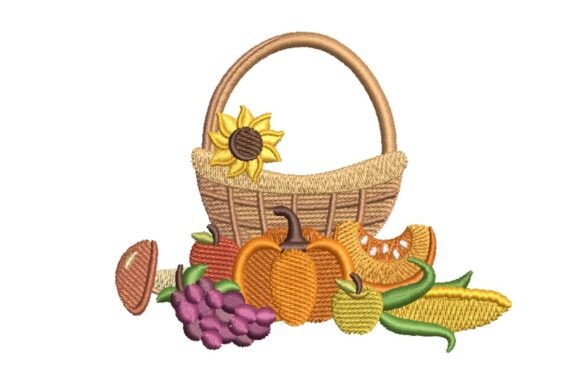
Harvest Basket Review for Small Business Merch
As an experienced embroidery designer who has spent years refining designs for everything from high-end corporate uniforms to boutique handmade goods, I approach every new file with a critical eye. Today, I am reviewing Harvest Basket, a design described as a vibrant embroidery of a bountiful fall basket filled with seasonal fruits and veggies. My goal is to determine if this piece is truly ready for commercial application or if it requires adjustments before hitting the production floor.
First Impressions: Personality and Visual Appeal
The title Harvest Basket immediately sets a tone of abundance and warmth. When paired with the description emphasizing "vibrant" colors and "seasonal" produce, the design promises a rustic yet premium aesthetic. For a small business owner looking to capture the essence of autumn, this design feels friendly, welcoming, and distinctly handmade. It avoids being overly sterile or corporate, making it an excellent candidate for brands that want to project a sense of community and natural quality.
In the context of brand identity, this design suggests reliability and attention to detail. A bakery using this on their aprons signals fresh ingredients; a florist might use it to denote seasonal arrangements. The visual personality is bold enough to stand out but detailed enough to look professional rather than amateurish. It strikes a balance between decorative and functional, which is crucial when integrating embroidery files into a cohesive marketing strategy.
Real-World Applications for Commercial Brands
When evaluating Harvest Basket for actual merchandise, its versatility becomes apparent. This design is not just a logo; it is a narrative element that enhances product value. Let us look at how this machine embroidery design performs across various high-demand items for small businesses.
- Embroidered Patches: The bountiful nature of the basket makes it ideal for sew-on patches. These can be applied to denim jackets, tote bags, or even the back of caps for creative studios. The imagery of seasonal fruits and veggies translates well to a patch format, serving as a badge of pride for staff or customers.
- Staff Uniforms and Aprons: For cafes, bakeries, or farmers markets, placing this design on the chest or pocket area of work shirts adds a touch of professionalism. It humanizes the brand and creates a visual connection between the worker and the season's offerings.
- Tote Bag Design: A canvas tote bag featuring Harvest Basket is a classic example of effective small business merch. The design fits naturally within the rectangular space of a tote, offering a practical gift item that customers will actually use, thereby extending brand visibility.
- Cap Embroidery: While the curved surface of a cap presents challenges, the central focus of the basket allows for a strong front-panel placement. It works well for event merch or promotional giveaways where a distinct, colorful logo is needed.
- Product Packaging Accents: Imagine a sticker or a small embroidered label attached to a jar of honey or a box of artisan cookies. This design acts as a seal of quality, reinforcing the handmade product aspect of the brand.
Strategic Use in Brand Identity
Integrating Harvest Basket into your inventory does more than just add decoration; it builds customer trust. Consistency in visual assets is key to recognition. If a customer sees this design on a hat, then later on a tote bag, and finally on a menu board, the repetition cements the brand in their memory. The warm, autumnal theme evokes feelings of comfort and nostalgia, which are powerful emotional triggers for buyers. By using this design on custom apparel, you elevate the perceived value of your goods, suggesting that care was taken in both the creation of the product and the branding itself.
Critical Considerations and Potential Pitfalls
While the design is promising, a professional review must address where caution is required. Not every digital embroidery file performs equally on every surface. Here are specific scenarios where Harvest Basket might need careful handling.
Small Patch Sizes: If you plan to reduce this design to a tiny 2-inch patch, details like the individual leaves or small fruits may become indistinguishable blobs. High stitch density can cause puckering on small areas. Always test the design at the intended final size before mass production.
Curved Surfaces and Cap Fronts: Embroidering on a curved brim or the front of a fitted cap requires precise hoop placement. If the design is too wide, it may distort around the curve, ruining the symmetry of the basket. Ensure the hoop size matches the garment curvature to avoid distortion.
Fabric Texture and Color: Dark uniforms can sometimes swallow up lighter thread colors, reducing the vibrancy of the "bountiful" palette. Conversely, textured fabrics like heavy canvas or wool can make fine outlines look jagged. You must adjust the thread colors and underlay settings based on the specific material.
Frequent Washing: Items like aprons and work shirts undergo rigorous cleaning cycles. Designs with high stitch counts or loose threads are prone to fraying over time. Verify that the stitch density is optimized for durability so the design remains crisp after multiple washes.
Practical Designer Notes for Production
Before you commit to a full run of branded merchandise, follow these essential steps to ensure the success of your commercial embroidery project.
- Test in Black and White: Convert the design to grayscale first. Does the contrast hold? If the tonal values are too similar, the design will lack definition regardless of color choice.
- Check Thread Color Contrast: Review the available thread colors against your fabric. Vibrant autumn hues need to pop against the background material. Poor contrast kills the impact of the design.
- Inspect Spacing and Density: Zoom in on the digital file. Are there areas where stitches overlap too heavily, causing bulk? Is there enough negative space to prevent the design from looking cluttered?
- Confirm Hoop Size: Ensure the design dimensions fit comfortably within your standard hoop sizes without cutting off elements. If the design is larger than your hoop, you may need to split the embroidery or use a larger frame.
- Test on Real Fabric: Do not rely solely on screen mockups. Stitch the design on the actual fabric you intend to use. Fabric texture changes how light hits the thread and can alter the final look significantly.
- Use Proper Stabilizer: The stability of the base fabric is paramount. For lightweight tees, a cut-away stabilizer is often necessary to support the weight of the dense fruit and veggie details. For sturdy canvas, a tear-away might suffice.
- Create a Printable Mockup: Before ordering, generate a high-quality printable mockup for client approval. This allows stakeholders to visualize the finished product on the actual garment.
- Verify Commercial Licensing: Most importantly, confirm that you have the rights to use Harvest Basket for commercial purposes. Check the license terms provided by the designer to ensure you are compliant with all usage restrictions.
Final Thoughts on Design Assets
Harvest Basket represents a strong addition to any collection of design assets aimed at small business owners and crafters. Its ability to convey a story of abundance and seasonality makes it a versatile tool for building a recognizable brand. Whether used as a chest logo accent, a sleeve detail, or a primary mark on a tote bag, this design has the potential to elevate your finished product.
However, the difference between a good design and a great one lies in execution. By paying close attention to stabilizer selection, thread choices, and testing procedures, you can ensure that your brand identity shines through every stitch. Take the time to evaluate the file thoroughly, and Harvest Basket will serve as a valuable asset in your arsenal of custom apparel and promotional items.