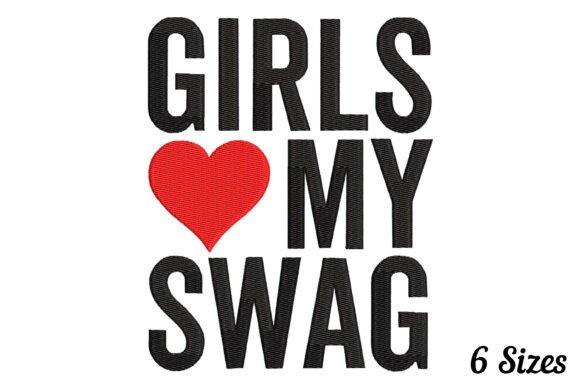
Girls Love My Swag Embroidery Review
When I first opened the file for Girls Love My Swag, my immediate reaction was one of cautious optimism. As a designer who has spent years turning digital files into tangible, stitched reality, I know that a catchy title often hides technical pitfalls. This design falls under the category labeled "Boys," which is an odd classification for a phrase explicitly celebrating girls, but let's set that metadata aside and look at what actually matters: the visual personality and the stitch execution.
The playful nature of this design is its strongest asset. The cartoonish appeal mentioned in the product description isn't just fluff; it translates well to embroidery. It feels like something you would see on a boutique tote bag or a custom sweatshirt for a young creative. However, before I commit this design to a client's order or list it as a finished product on my Etsy shop, I need to evaluate how it handles real-world stitching challenges. Does it hold up under the needle? Is the layout balanced enough for various fabric textures?
First Impressions and Visual Personality
The mood of Girls Love My Swag is undeniably confident and slightly cheeky. In the world of handmade goods, capturing that specific attitude without looking cluttered is difficult. The design relies heavily on typography with perhaps some decorative accents to support the text. From a design judgment perspective, the layout seems optimized for medium-sized applications. It doesn't scream for attention so loudly that it overwhelms the garment, yet it is bold enough to be the focal point of a project.
I am particularly interested in how the "cartoonish" elements translate from screen to thread. Digital art can sometimes lose its charm when converted into stitches, especially if the details are too fine. If this design includes small curves or intricate lines within the letters, those will require careful handling during digitization. For a machine embroidery design intended for commercial use, clarity is king. If the lines are too thin, they might disappear into the fabric texture, ruining the "swag" factor we are trying to achieve.
Real-World Application: The Tote Bag Scenario
Let's imagine a practical scenario. I have a client who runs a small craft business specializing in personalized gifts for teenage girls. They want to create a line of embroidered tote bags for a summer festival. They are considering Girls Love My Swag as their flagship design. This is where the rubber meets the road.
Tote bags are usually made of canvas or heavy cotton duck, which provides a stable surface for stitching. However, the texture of the fabric can eat away at fine details. If the design features satin stitch lettering, it should pop beautifully against the canvas. But if there are running stitch outlines meant to look hand-drawn, they might get lost in the weave of a coarse fabric. I would test this by stitching a sample on scrap canvas first. The goal is to ensure the contrast between the thread color and the bag remains high enough to convey the message clearly.
Beyond the tote bag, this design screams "sweatshirt embroidery." Imagine a soft fleece hoodie with this phrase centered on the chest or back. The stretchiness of the fabric is a major concern here. If the design has a high stitch density, it could cause the fabric to pucker or distort, making the shirt look unprofessional. A good embroidery file must account for this tension. I would recommend using a cut-away stabilizer for sweatshirts to prevent the design from collapsing over time after washing.
Navigating Technical Challenges and Limitations
Not every surface is a friend to this design. There are specific situations where Girls Love My Swag requires extra caution. For instance, applying this to a curved surface like a baseball cap is risky unless the digitizer has specifically compensated for the curvature. Flat designs often look distorted when forced onto a rounded brim. Similarly, attempting to stitch this on a tiny baby onesie might result in a design that looks out of proportion. The phrase itself is long, which means it needs a generous amount of horizontal space.
Dark fabrics present another hurdle. If the client wants this on a black t-shirt, the thread colors become critical. If the design relies on light threads for detail, they might not show up against the dark background. Conversely, using dark threads on a light background is generally safer but requires a check on the contrast ratio. I always advise testing in black and white mockups before running the machine. This helps visualize the balance of fill versus negative space.
We also need to consider the longevity of the finished product. If this is intended for a tea towel or napkin that will go through frequent wash cycles, the stability of the stitches is paramount. Dense areas of fill stitch can trap lint and water, leading to mold or mildew if not dried properly. For kitchen items, lighter stitch densities are often preferred to maintain breathability and ease of cleaning.
Strategic Use Cases for Makers and Sellers
For those of you selling on Etsy or running a small shop, understanding where this design fits best is crucial for your brand consistency. This design is perfect for:
- Personalized Gifts: Great for birthday presents or holiday swaps where a fun, sassy vibe is desired.
- Apparel Decor: Ideal for sweatshirts, hoodies, and oversized tees where the design can breathe.
- Home Decor: Works well on pillow covers and wall art pieces made from stable fabrics.
- Accessories: Excellent for makeup bags and lunch totes where durability is key.
However, avoid using it for delicate items like sheer scarves or very thin synthetics unless you have tested the stabilizer thoroughly. Also, be wary of using it on products that require extreme flexibility, like swimwear or tight-fitting leggings, as the stiffness of the embroidery could restrict movement.
Professional Notes for the Designer
Before you upload this to your store or start stitching for clients, there are a few non-negotiable steps. First, verify the licensing terms. Just because a file says it's for "commercial use" doesn't mean you can sell unlimited quantities without checking the specific vendor agreement. Some licenses limit the number of sold items or prohibit resale of the digital file itself.
Second, inspect the small details. Zoom in on the corners of the letters and any decorative elements. Are there any loose ends or jagged edges that might snag? Run a test stitch on a piece of scrap fabric that matches your final product. Check the thread color contrast immediately. Sometimes, a color that looks vibrant on your monitor appears muddy once stitched.
Finally, consider the hoop size. If the design is large, ensure your machine's hoop can accommodate it without cutting off parts of the phrase. If you are working with smaller hoops, you may need to split the design, which adds complexity to the finishing process. Always confirm whether the design works for both personal projects and commercial assets, as this distinction affects your pricing and legal liability.
In conclusion, Girls Love My Swag has the potential to be a standout piece in a handmade collection. Its playful tone resonates with current trends, and its versatility across different products makes it a valuable asset for any crafter. However, success lies in the preparation. By respecting the limitations of the fabric, choosing the right stabilizer, and testing rigorously, you can turn this digital concept into a high-quality finished product that customers will love and trust.